

Own your destiny in work injury management
It is time to recognize a fundamental truth. While workers’ compensation insurers are paid by your company to help protect your interests in injury management and prevention, their primary focus is their own business. That is not a criticism, it is a reality. If your company has significant injury challenges, you may see premiums rise sharply or coverage options tighten.
Occupational health providers face a related challenge. They are expected to manage injuries and return people to work quickly while limiting unnecessary OSHA recordables. Without precise job information, conservative restrictions become the default because they are the safest option for both the worker and the provider.
Specialists outside occupational medicine typically do not focus on employment. Yet we know prolonged time away from work rapidly increases the risk of job loss. If you want better outcomes, stay-at-work and return-to-work processes must be managed with objective structure.
Take control by owning your documentation
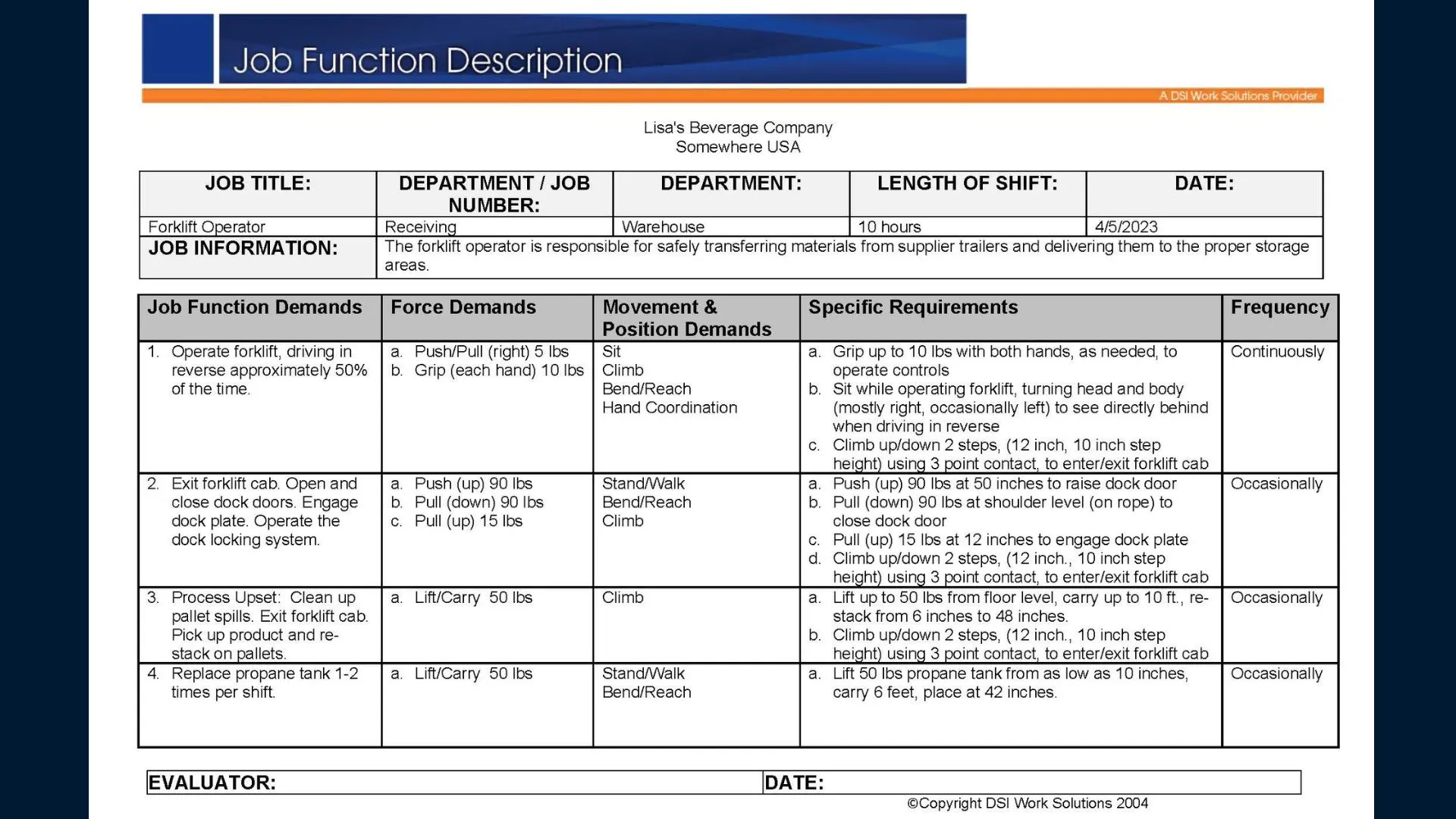
Companies can prepare to interact more effectively with insurers, occupational health, and internal stakeholders such as HR, safety, supervisors, and employees. The foundation is documentation you control, not documentation you borrow. One example is a job-function-based description supported by a physical demands analysis.
Many companies say, “Our insurance company does that for us,” or “Our occupational health provider does that for us.” Those resources can help, but they do not replace ownership. Whether documentation is created internally or with outside support, your company needs to understand the process and how to use the output.
The power of function-based descriptions
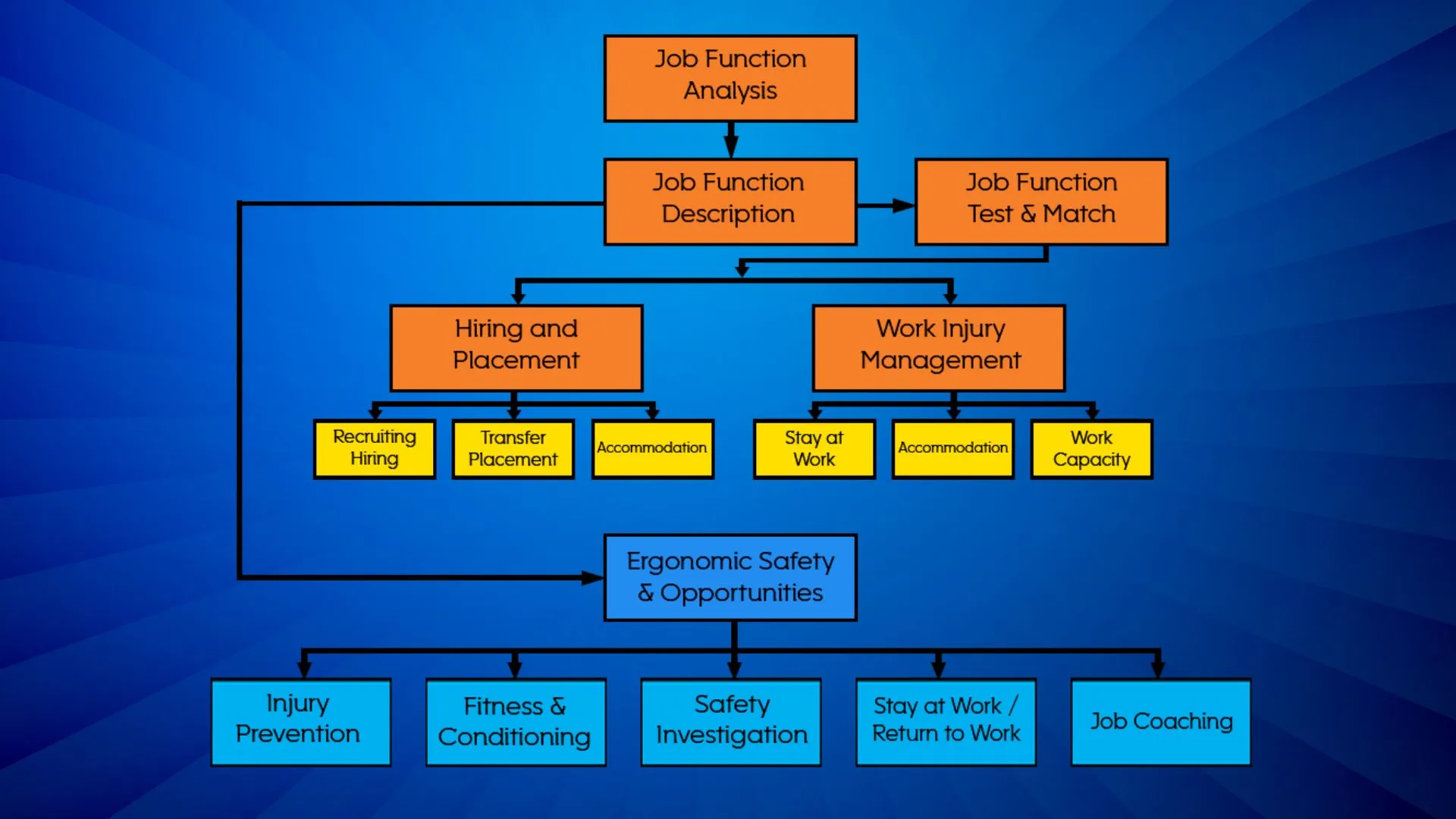
Function-based documentation focuses on the physical aspects of work. When it is built from objective demand data, it becomes useful across multiple goals: reducing injuries, improving return-to-work outcomes, stabilizing short-tenure turnover, and keeping an aging workforce safe and productive.
This is where strategy becomes practical. You do not need more generic safety messaging. You need clear job requirements that support consistent decisions, from hiring and onboarding to accommodations and return to work.
Effective communication is the differentiator
The most valuable feature of strong documentation is the communication it enables. Poor communication has increased costs since workers’ compensation systems expanded in the 1960s. When employers implement consistent, function-based communication, results improve. Costs drop, safety initiatives become more targeted, productivity improves, and turnover risk declines.
This kind of system requires investment, but the highest-performing companies do not wait for others to solve the problem. They implement proactive processes and manage success internally.
Challenge the status quo
If your organization is not operating this way yet, ask why. Your success should not depend on external parties whose priorities cannot be identical to your own. You can learn a system that supports the outcomes described above and helps you manage injury prevention and injury management with stronger control.
To explore the training and tools that support this approach, visit our Job Function Matching page. For a deeper discussion, review our Job Function Matching resources and related articles.
To your success
To your company’s success, and to your own. Embrace the challenge, own your destiny, and choose to be the professional that dares to be different.