Introduction
Job Function Testing (JFT) helps confirm that a person's capabilities match the physical demands of work. When tests are built from job analysis and applied consistently, they strengthen safety, improve performance, and support clearer decision-making.
This article shares practical examples of how JFT can be designed and applied in both high-risk and high-volume environments. The goal is to show what job-related testing can look like in real terms and how it supports operational efficiency and safety standards.
Designing testing for real-world or clinical settings
Job function testing can be delivered in two primary environments: real-world simulations and controlled clinical settings. Real-world simulations mirror the job site as closely as possible so the test reflects what work actually requires.
Clinical settings provide a standardized environment where specific physical requirements can be measured consistently. Both approaches can be effective when the test items are tied to essential job demands and administered with clear, repeatable procedures.
Firefighter examples
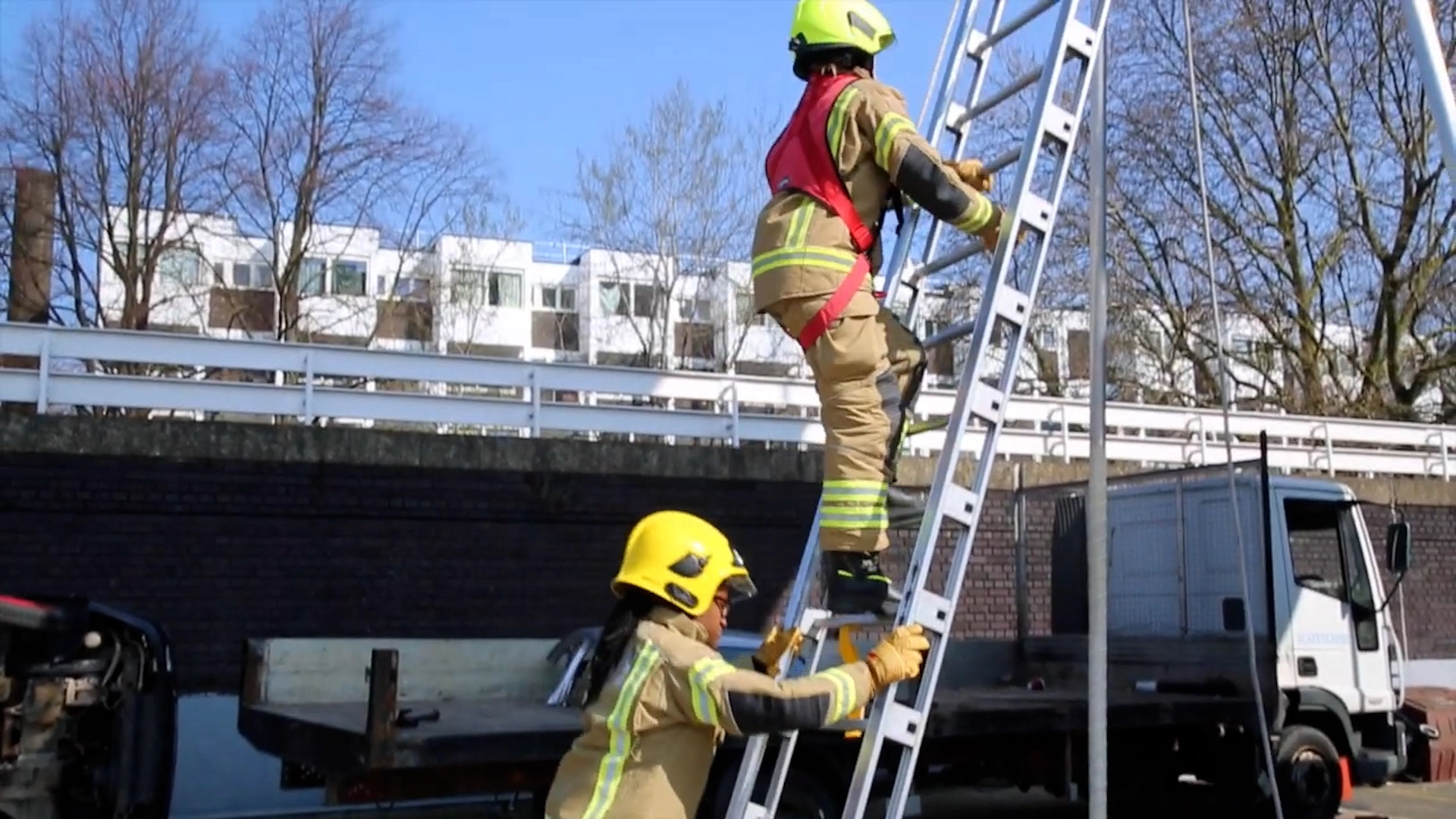
Firefighting demands high physical capacity under stress, so testing must reflect the job's true requirements. For example, tests may include crawling through confined spaces to simulate victim extraction and movement in restricted environments.
Climbing ladders up to meaningful heights can be used to verify tolerance for working at elevation and the physical strain involved. Hose management can be tested through scenarios that require deploying, controlling, and retrieving hoses in a controlled but job-relevant way.
Warehouse examples
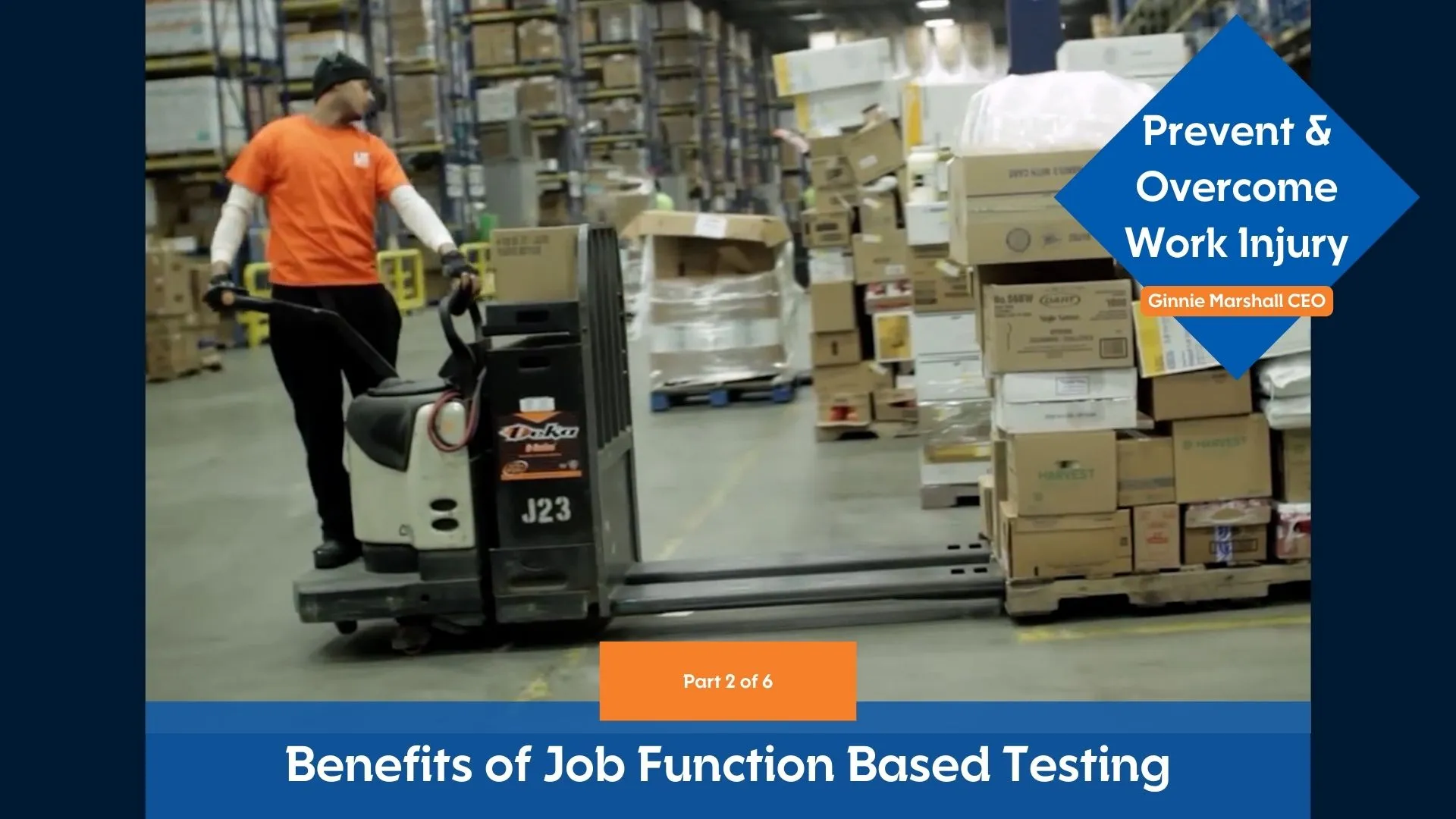
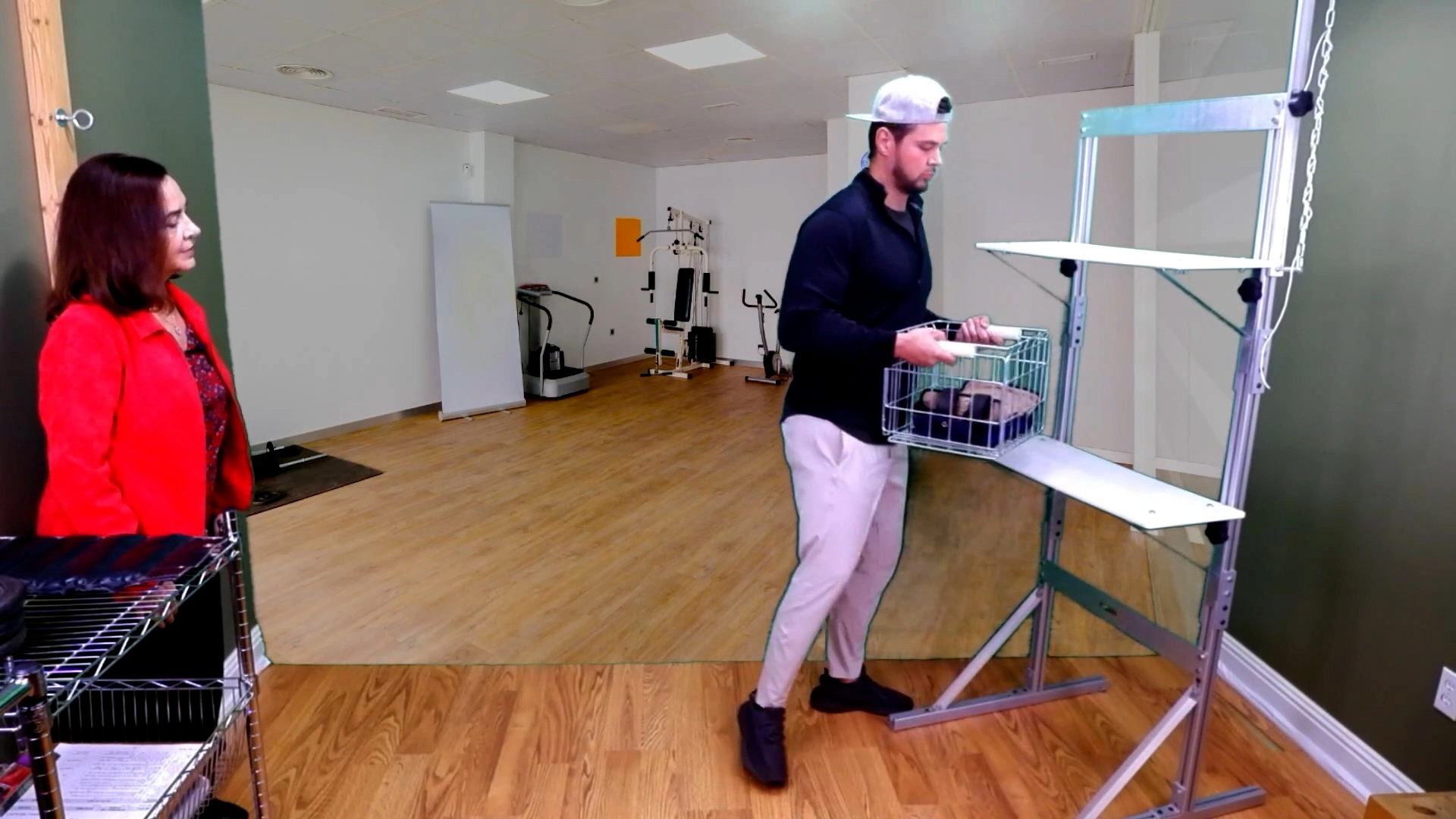
Warehouse testing commonly focuses on lifting and case selection, where repetition, load handling, and reach heights vary throughout a shift. Adjustable shelving can simulate the range of retrieval and placement heights found in the work environment.
Weighted crates can replicate typical product weights so the test reflects the forces and control required on the job. When designed well, warehouse testing clarifies whether a person can meet the essential demands safely and consistently.
Benefits of job function testing
Job function testing supports injury prevention by reducing mismatches between capability and demand. It can also guide safer return-to-work decisions by clarifying what an injured employee can do now and what progression is needed before full duty.
JFT can support accommodations when needed by documenting task-level requirements and identifying where modifications are appropriate. When tests are job-related and documented clearly, they help organizations make safer, more consistent decisions while maintaining compliance.
Conclusion
Job function testing is most valuable when it reflects real work and provides clear, actionable results. If you want to explore practical tools and training to implement JFT more effectively, visit our Job Function Matching page and sign up for the Job Function Matching System preview course at no cost.