Introduction
The EEOC continues to file disability discrimination lawsuits across industries. A common theme is not complicated. Employers can reduce risk by matching job requirements to specific qualifications, providing reasonable accommodations when available, and avoiding rigid policy application that ignores individual circumstances.
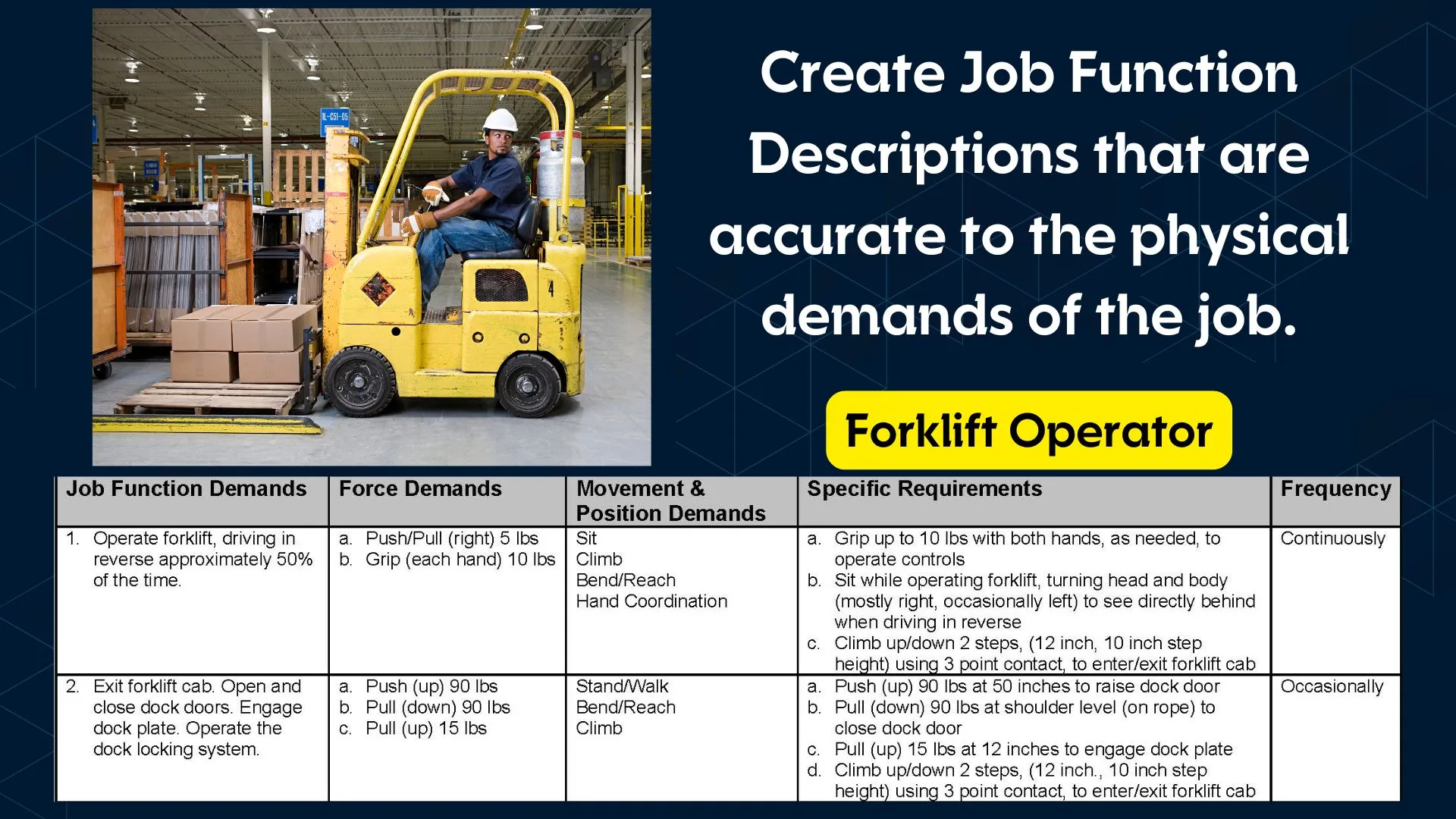
In practice, those goals depend on job clarity. If essential functions and their critical physical demands are documented in detail, accommodation discussions become more objective and decisions become easier to defend.
Overview of the cases
The EEOC summarized three ADA lawsuits filed in different industries. You can read the roundup here: EEOC Sues Three Employers for Disability Discrimination.
- TNNY Hotel (The Ned NoMad): The EEOC alleged the hotel refused a stool accommodation for a host with a knee condition and terminated employment.
- Smith’s Detection: The EEOC alleged the employer demoted an employee with hearing loss instead of providing requested PPE.
- Holsum of Fort Wayne: The EEOC alleged the bakery refused to allow a walker under a personal items policy, forced leave, and terminated employment.
Importance of essential functions and specific physical demand requirements
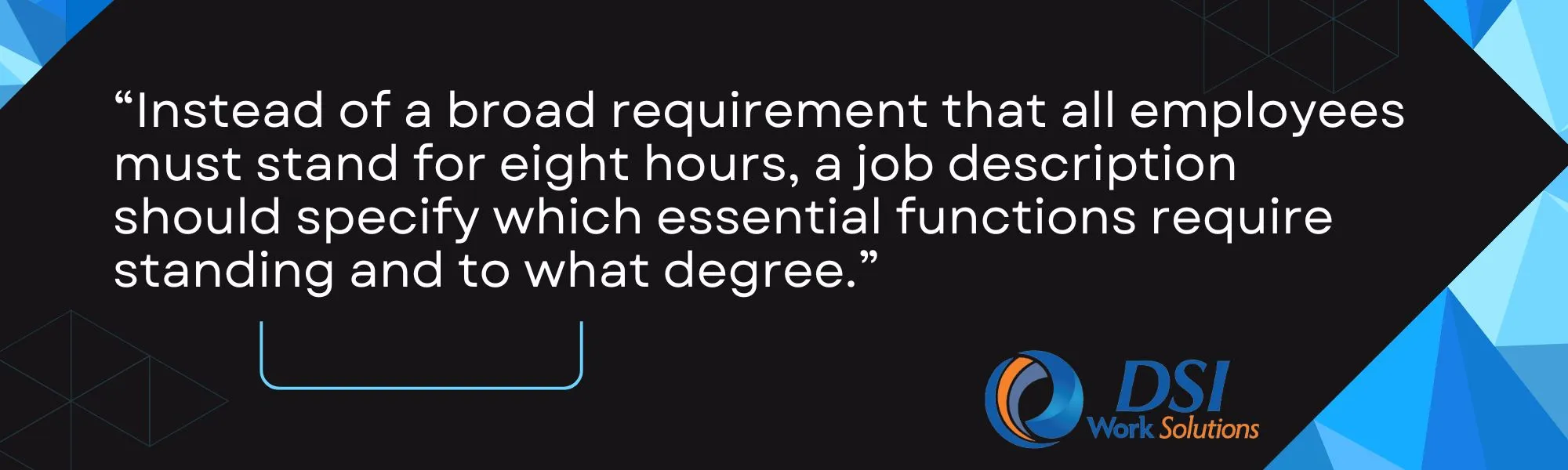
These cases reinforce the importance of specific, job-based essential functions and physical demand requirements. Generic requirements like “must stand for eight hours” are rarely helpful. Instead, describe which essential functions require standing, how long, how often, and what other demands exist in the workflow.
This specificity supports the interactive process. It helps employers explain what the job requires, consider whether an accommodation allows safe performance, and document why a decision was made. It also helps avoid decisions driven by assumptions or stereotypes about disability.
Safety should be part of the analysis. For example, if an assistive device like a walker creates a safety concern in a production environment, the concern should be evaluated and documented alongside alternatives rather than used as an unexamined reason to deny accommodation.
Coordinating with healthcare experts
Employers can strengthen decision-making by coordinating with healthcare and safety experts. These professionals can help determine whether an accommodation is likely to solve the issue, what risks exist, and what alternatives may work better.
This kind of collaboration can also prevent misunderstandings. It shows good-faith effort and creates documentation that supports why an accommodation was accepted, modified, or found unreasonable in the specific job context.

Avoiding a “bright line” approach
A “bright line” approach is the rigid application of policy without considering individual circumstances. It can create unnecessary risk in accommodation decisions because it replaces job-based reasoning with a universal rule.
Policies should guide decisions, but they must allow for case-by-case analysis. The ADA is built around individualized assessment, including whether a reasonable accommodation exists without undue hardship.
Practical EEOC links for follow-up
- EEOC roundup: EEOC Sues Three Employers for Disability Discrimination
- Ned NoMad settlement (host stool accommodation)
- Holsum settlement (walker accommodation)
- EEOC disability-related resources
Conclusion
EEOC disability lawsuits are often preventable. Employers reduce risk when they define essential functions precisely, document critical physical demands, collaborate with experts, and avoid rigid policies that bypass individualized assessment.
If you want a practical system for documenting job demands and supporting objective decisions, explore the Job Function Matching page.