Introduction
Function-based job analysis plays a pivotal role in workplace safety and supports professionals in physical therapy, occupational therapy, athletic training, and related roles with responsibility for injury prevention. In our recent video series, we explored how job analysis influences injury prevention and injury management. Here, we go a step further into job function matching and how to apply these concepts in real work environments.
The purpose of this article is practical. When job demands are documented clearly and objectively, prevention strategies can be tied to real risks rather than assumptions. That improves adoption, improves communication, and helps protect worker health while supporting productivity.
The importance of job analysis
Job analysis helps prevent and manage workplace injuries by connecting what a job requires with what an employee can safely do. When a work environment understands demands in concrete terms, injury prevention programs can be tailored, training becomes more relevant, and rehabilitation plans can align with the physical requirements of the job.
The most important shift is moving from opinion to fact. Objective, function-based job analysis documents physical demands methodically. That approach contrasts with subjective methods built on personal judgment and assumptions. In musculoskeletal safety, where the impact of interventions can be measured, objective documentation leads to more reliable decisions and more defensible recommendations.
Documentation and its critical role
Documentation is what turns analysis into action. Clear, concise, and complete job analysis documentation becomes a usable guide for employers, therapists, and employees. It translates complex job demands into specific, actionable information that supports safer task design and clearer expectations.
Well-documented findings also streamline return-to-work. Employers can implement modifications with confidence, assign tasks within an employee's capabilities, and reduce the risk of re-injury. In practice, documentation helps maintain operational efficiency while keeping safety at the center of decision-making.

Real-world application: grocery stocker case example
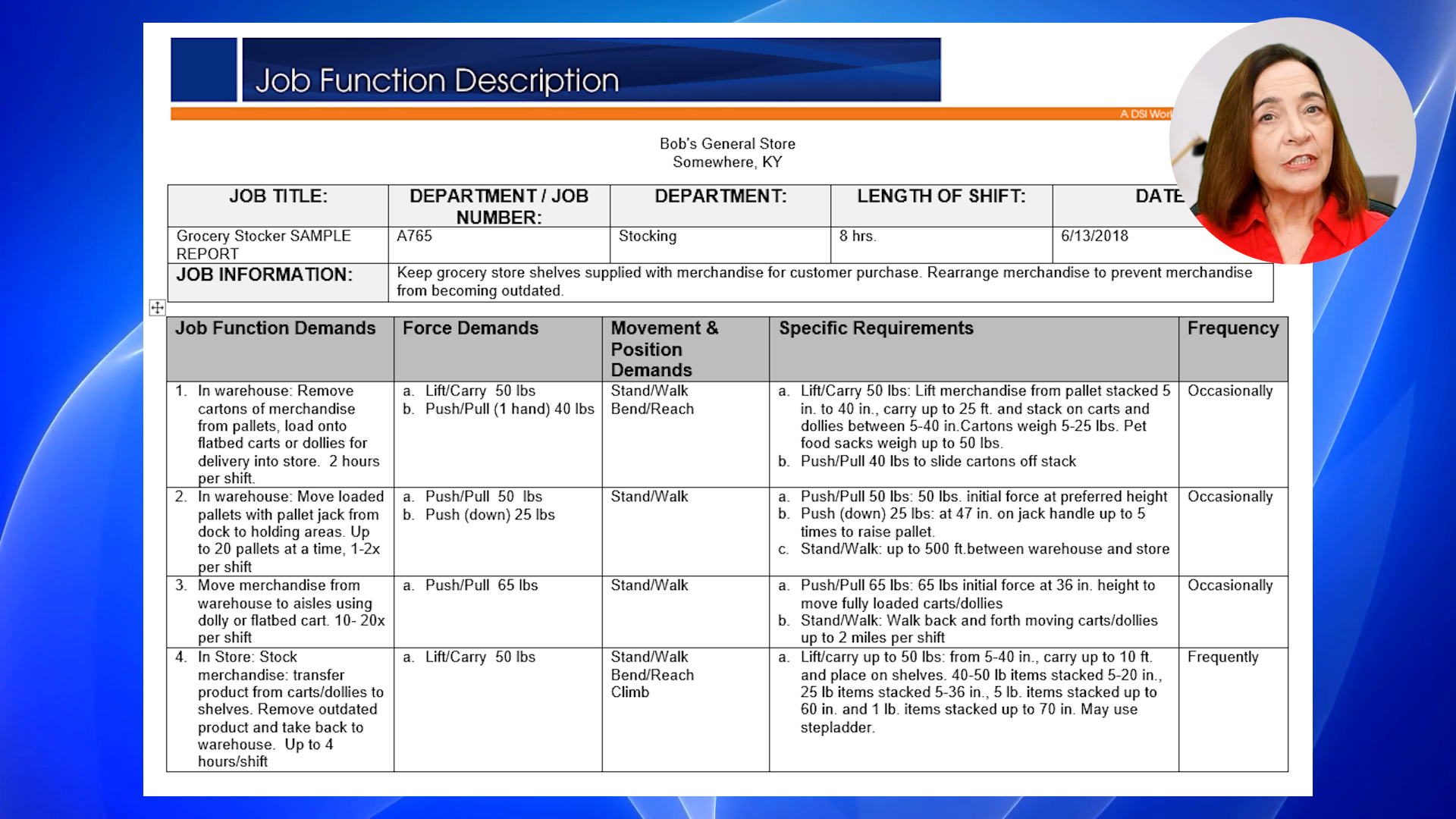
Consider a grocery stocker returning after an injury with restrictions such as no lifting over 25 pounds or no work above shoulder level. Job analysis documentation becomes critical because it provides an objective description of the job's physical demands and communicates them clearly to the employee and employer representatives with a need to know.
This documentation also helps interpret restrictions and can reduce days away from work and restricted work days. When each job function demand, such as transporting merchandise or stocking shelves, is documented and compared with restrictions, stakeholders can make more informed decisions about what work activities are allowed and what needs modification. The outcome is a safer, smoother transition that balances employee needs with operational requirements.
Interpreting job function demands
Interpreting job function demands requires breaking down each function associated with the role. In the grocery stocker example, that may include removing cartons from pallets, using pallet jacks, and stocking shelves. Each function carries distinct requirements, including lift weights, push and pull forces, and reach heights.
With these demands documented, restrictions or demonstrated abilities can be compared directly. If a job includes routine lifts over 25 pounds, those tasks would be off-limits for someone with a 25-pound limit unless they can be modified. This step ensures work assignments align with recovery needs and support long-term safety.
The role of testing in job matching
Testing is often the next step in job matching because it provides objective capability data. These assessments may measure strength, flexibility, endurance, and other physical attributes relevant to the job. When capabilities are measured and compared to documented demands, placement and return-to-work decisions become more accurate.
This benefits both the employee and the employer. Employees gain clarity about current abilities and limitations, and employers reduce the risk of re-injury while supporting productivity. When capability and job requirements are aligned, the workplace becomes safer, more efficient, and more sustainable.
Conclusion
If you want to build stronger injury prevention strategies, start with objective demand data and document it in a way people can use. Clear job analysis documentation supports safer work design, better communication, and faster, safer return-to-work decisions.
To explore tools and resources that support job analysis and job function matching, visit our Job Function Matching page.