Introduction
Job analysis is an essential process for identifying ergonomic opportunities and guiding interventions that improve worker safety and efficiency. When you evaluate job functions carefully, you can spot the activities that create discomfort, fatigue, or injury exposure and prioritize changes that have the greatest impact.
In this installment of our series, we focus on how job analysis helps you identify ergonomic risks early, decide which findings deserve deeper investigation, and plan interventions that are practical in real work environments.

Ergonomic opportunities through job analysis
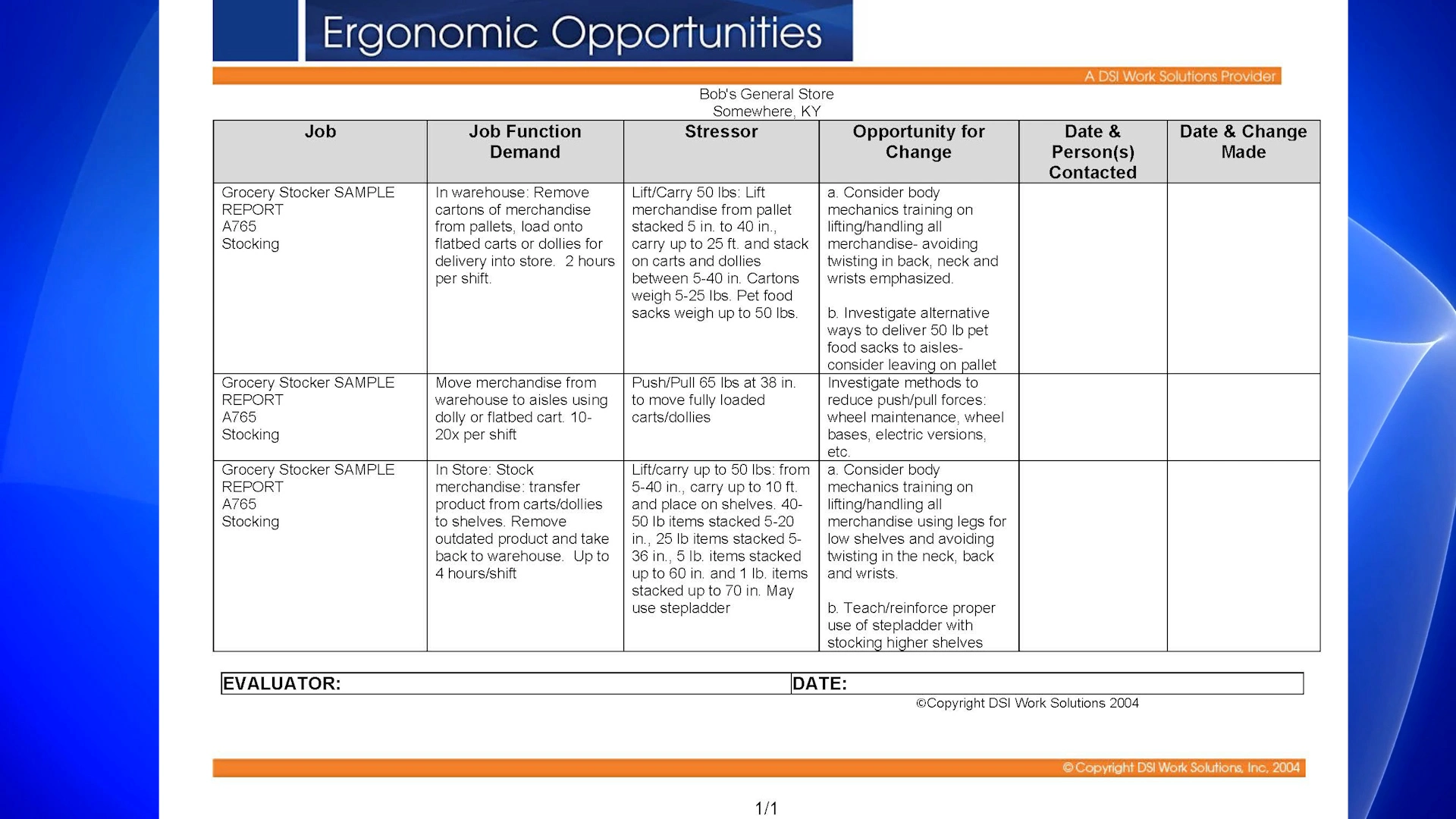
Job analysis creates a structured way to uncover ergonomic opportunities. By breaking work down into job functions and observing how tasks are performed, you can identify which activities introduce high force, awkward posture, repetition, sustained static positions, or inefficient material flow.
This is where the value of detail shows up. The more specific the job function description, the easier it is to pinpoint root causes and plan targeted assessments. Job analysis does not replace ergonomics, but it often tells you where ergonomics will matter most and why.
Identifying ergonomic opportunities
Identification starts by assessing each job function for risk and inefficiency. A useful approach is to categorize work activities by ergonomic impact and focus on those that create the greatest exposure. Criteria often include severity of risk, frequency, duration, and impact on health and productivity.
Not every finding requires a full ergonomic study. In many cases, immediate improvements can be implemented quickly, such as minor workstation adjustments, better tool selection, improved material staging, or assistive devices that reduce strain. The goal is to allocate time and resources where they will improve safety most.
Prioritizing ergonomic interventions
Prioritization works best when you combine employee feedback with job analysis data. Employees often identify problems first because they live the work every day. Their input, gathered through safety meetings, observations, and routine check-ins, provides context that data alone can miss.
When you pair that feedback with objective job analysis findings, you get a clearer picture of which interventions should happen now and which require a larger redesign. This approach supports both quick wins and long-term improvements, and it often increases adoption because workers see that their concerns are being addressed.
Introducing humanomics
Humanomics is a complementary concept to ergonomics that emphasizes the interaction between employees and their work environment. Traditional ergonomics focuses on adapting work to fit the worker. Humanomics adds the perspective that workers can also be supported in adapting how they engage with the work in a way that improves safety and productivity.
This dual focus strengthens interventions. The goal is not only changing equipment or layout, but also building employee capability through coaching, practice, and shared ownership of safer work methods. When both sides are addressed, improvements tend to last.
Case study: addressing push-pull forces with ergonomic solutions
Consider a warehouse task that requires frequent push-pull effort, such as moving merchandise with manually operated pallet jacks. Employee feedback and job analysis data may identify this as a primary source of strain. From there, you can examine conditions that increase exposure, such as equipment type, wheel condition, load weight, floor conditions, and layout constraints.
Interventions can range from simple upgrades, such as better handles, maintenance protocols, and improved traffic paths, to broader changes like equipment modernization and layout redesign. The key is matching the solution to the documented demand and choosing changes that reduce exposure without disrupting productivity.
Conclusion
Job analysis helps you see ergonomic risk clearly and prioritize interventions that reduce exposure before injuries escalate. If you want to go deeper into job analysis, ergonomic opportunity identification, and practical implementation, visit our Job Function Matching page.